24*7 365 days
24*7 365 days
Neurosurgery is a form of surgery that focuses on fixing the problems associated with the brain, spinal cord, and nervous system throughout the body. The doctors involved in this form of surgery are known as neurosurgeons. However, not all neurosurgeries are the same, and there are many types. Some of you may wonder, what are the common types of neurosurgeries?
In this blog, we explore some of the common types of neurosurgeries and their procedure. Do note that the specific procedure varies depending on the patient’s circumstances.
 There are many types of neurosurgeries, and the specifics vary based on the needs of individual patients. However, some neurosurgeries are commonly performed. Some of the common types of neurosurgeries and their procedure include:
General neurosurgery consists of a wide range of surgical procedures. This is aimed at various conditions that affect the brain, spinal cord, and peripheral nerves. This field is highly complex and demanding and requires extensive training and expertise because of the delicate nature of the structures involved.
General neurosurgeries include the following aspects:
The specific process varies based on particular conditions within general neurosurgery. Regardless, the general procedure is as follows:
The process begins with a consultation. In this process, the neurosurgeon assesses the patient’s symptoms, medical history, and tests such as MRI to know the underlying condition.
Based on the diagnosis, the neurosurgeon develops a treatment plan customised to the patient’s specific needs. Treatment planning often involves surgeries and non-surgical treatments like medications and physical therapy.
Before the surgeries, the patient goes through evaluations and preparations, which often include blood tests, imaging studies, and discussions about the procedure.
Neurosurgeons perform procedures like tumour removal, nerve repair, spinal cord decompression, and brain abnormality correction.
After the surgery, specialised equipment is used to monitor the vital signs and ensure the safety of our patients during the surgery.
Patients receive care to manage pain, prevent complications, and aid in recovery. Postoperative management also includes physical, occupational, and speech therapy that may be prescribed to restore function.
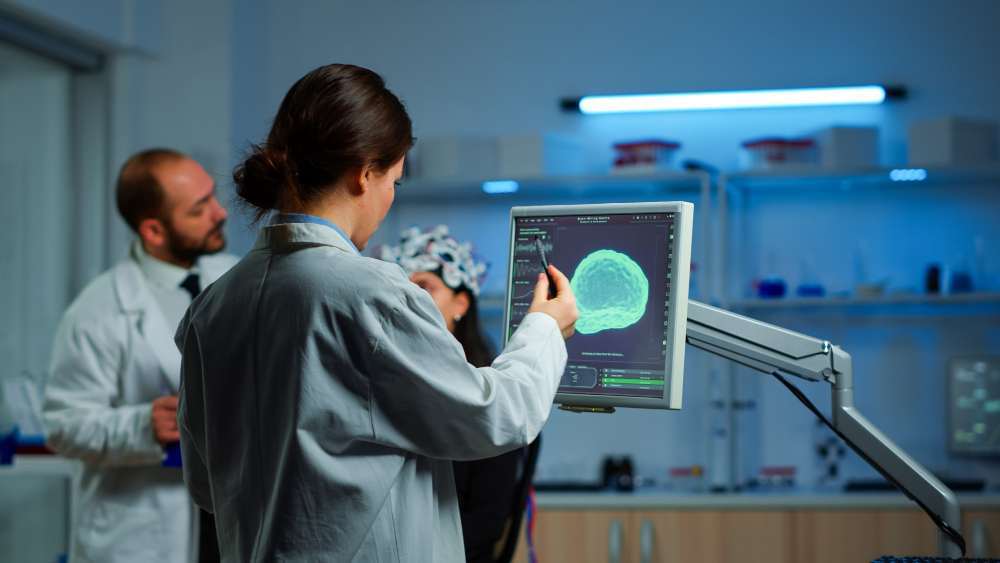 Neurosurgical oncology is a specialised field within neurosurgery focusing on the diagnosis and treatment of tumours. Additionally, neurosurgical oncology also covers other cancers that affect the central nervous system. There are various aspects of neurosurgical oncology, including the following:
The specific process of neurosurgical oncology varies based on the area this surgery is being worked. That said, we can provide you with the general processes regarding this process. This general outline is as follows:
Before the process begins, the neurosurgeon’s diagnosis and imaging process. The doctors use imaging techniques such as MRI, CT scans, and PET scans. These diagnoses and imaging help in identifying tumour location, size, and characteristics.
Treatment plans are developed based on the type of tumour, location, size, grade, and health. These plans may include surgery, therapy, and/or chemotherapy.
After the doctors plan the treatment, they proceed to the surgery. During the surgery, the expert removes the tumours while preserving the neurological function.
Neurosurgical oncologists utilise advanced monitoring and imaging tools during the surgery to check the neurological function and tumour margins. After surgery, our patients get therapies as needed to target the remaining tumour cells and manage symptoms.
The Neurosurgical oncologists collaborate closely with a team of specialists, including medical oncologists, radiation oncologists and pathologists, to develop personalised care for our patients.
Paediatric neurosurgery is a form of specialised neurosurgery that focuses on the diagnosis, treatment, and management of neurological conditions in children up to the age of adolescence. This discipline of neurosurgery covers a wide range of disorders of the brain and spinal cord. Some key aspects of paediatric neurosurgery include:
The specific process of paediatric surgery varies depending on the type and area it is conducted. However, there is a general flow that all paediatric surgeries follow. This general flow goes as follows:
The preoperative phase is the part where the surgeons make preparations for the surgery. It can further be divided into two parts. The first part is assessment and diagnosis. In this part, the paediatric surgeons examine the patient through thorough consultations with their parents or guardians and explain the diagnosis, procedure, risks, benefits, and expected outcomes. The second part is about preparation. It includes getting consent from parents/guardians and providing instructions regarding fasting, medication adjustments, and hygiene practices.
Similar to the previous phase, the intraoperative phase can be divided into two steps. The first step is the anaesthesia phase, where the patient is dosed with anaesthesia to ensure that the child is free of pain during the surgery. The second aspect of this phase is surgery. As the core aspect of paediatric surgery, it encompasses conducting the surgery in a sterile environment by a team consisting of paediatric surgeons, anaesthesiologists and nurses.
Once the surgeons conduct the surgery, the next phase is the postoperative phase. In this phase, surgeons carefully monitor the child in the Post-Anesthesia Care Unit (PACU) to manage anaesthesia recovery. After this, surgeons provide pain relief through medications and non-pharmacological methods.
Once all the steps are done, the patients are required to stay in the hospital as the surgeons monitor for complications. surgeons also provide detailed care instructions to the parents that cover wound care, activity restrictions, and medications.
If required, the child/adolescent is provided with occupational therapy to aid recovery and restore function during the rehabilitation function. The surgeons also conduct ongoing assessments of child growth.
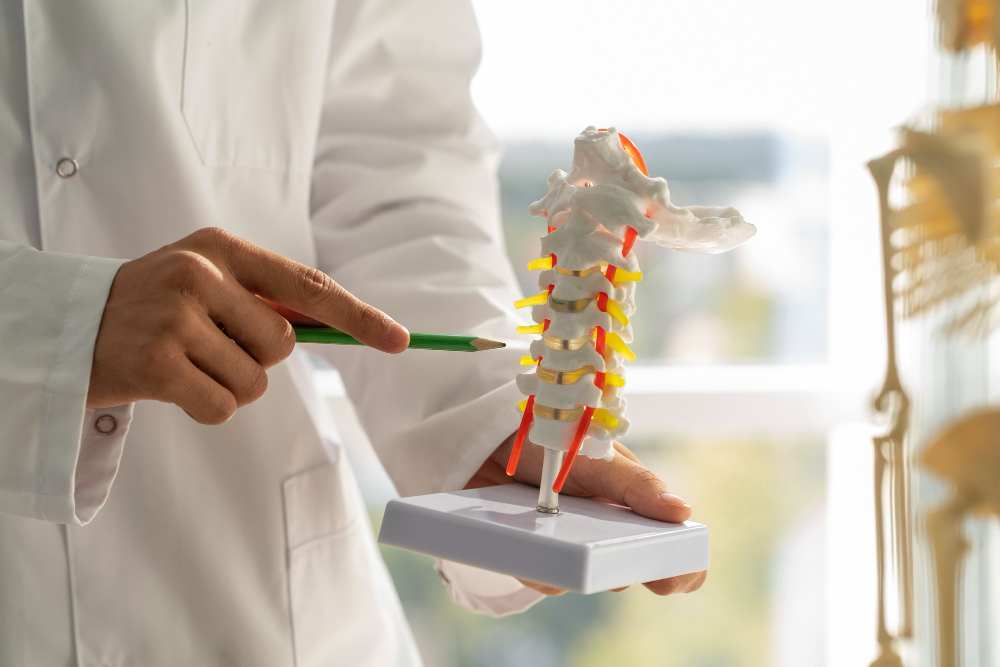 Commonly known as spinal neurosurgery, neurological spinal surgery is a specialised field of neurosurgery. It is a surgery that focuses on the diagnosis, treatment, and management of issues affecting the spine and spinal cords. Some of the key aspects of spinal surgery include:
The specific process varies based on the conditions and requirements of the patients. Regardless, the general process includes the following phases:
This phase includes the evaluation of the patient’s condition using the best technology available. Along with this, the first phase also involves detailed discussions with the patients and their families about diagnosis, surgery options, risks, and outcomes.
The preoperative preparation phase consists of three aspects. The first aspect is obtaining written consent after explaining the process and its risk to the patient and their family. After this, the surgeons provide guidelines for fasting, medication, adjustment, and hygiene practices before the surgery. The final aspect of this phase is providing psychological strength to prepare the patients and their guardians.
In this phase, the doctors first provide the patient with anaesthesia to ensure that the patient is comfortable and, depending on the situation, partially responsive. Then, the surgery is done in a sterile environment using the best techniques and technology available as per the needs of the patient.
The immediate postoperative care includes PACU monitoring and pain management. Patients are carefully monitored in PACU units immediately after the surgery. In this unit, doctors monitor the vital signs. Once the patient is stabilised, surgeons effectively manage pain through medications and other physical methods.
The fifth phase consists of continuous monitoring of the patient’s condition. Patients are observed for potential complications with a focus on mobilisation and proper wound care. Once the wounds are partially or completely healed, they are discharged. During the discharge procedure, doctors provide parents or other guardians with instructions regarding activity restrictions, pain management, and medication schedules.
Regular assessments are conducted to monitor the spinal health and manage ongoing symptoms. Depending on the needs, the surgeons also provide physical therapy and psychological support.
 Functional neurosurgery is also known as stereotactic and functional neurosurgery. It is a subspecialty of neurosurgery that focuses on the surgical treatment of neurological disorders that affect brain function, movement, and behaviour. There are many aspects of functional neurosurgery. They include the following:
The process of functional neurosurgery involves various states. The specific number of phases depends on the condition and state of the patient. Some general states include:
This state includes an assessment of detailed medical history, physical examination, and neurological assessment. It also includes imaging studies, neuropsychological testing and assessments, and evaluation.
The preoperative planning stage involves the selection of appropriate surgical procedures based on the patient’s condition and goals. Along with this, the preoperative planning state also includes the identification of target brain regions and the use of advanced imaging techniques for planning.
In this step, stereotactic frames or frameless neuronavigation systems are used for precise targeting. The surgeons may also use intraoperative neurophysiological monitoring, awake craniotomies, or sleep procedures, depending on the state of the patients. Electrodes, devices, or lesioning procedures are precisely implanted with intraoperative brain mapping and functional localisation as needed.
After the initial recovery and monitoring in the intensive care unit, implanted devices are adjusted and programmed. Rehabilitation and physical therapy may be necessary depending on the needs of the patient.
Regular follow-up visits are scheduled to monitor treatment effectiveness and side effects and adjust treatment parameters as needed.

Dr Devi Gurung is one of the highly experienced obstetricians and gynecologists of Nepal. She brings a unique and comprehensive approach to patient care with an MBBS and dual MD degrees in General Medicine and Gynecology & Obstetrics. With more than 35 years of experience, she is fully capable of managing a wide range of medical and reproductive health issues. Having the high experience and knowledge regarding women’s health, she can handle complex cases such as high-risk pregnancies, gynecologic surgeries, infertility, menstrual disorders, and menopausal care. Having an NMC number 2845, licensed by the Nepal Medical Council, she is widely recognized for her commitment to ethical practice, continuous learning, and patient-centred care.
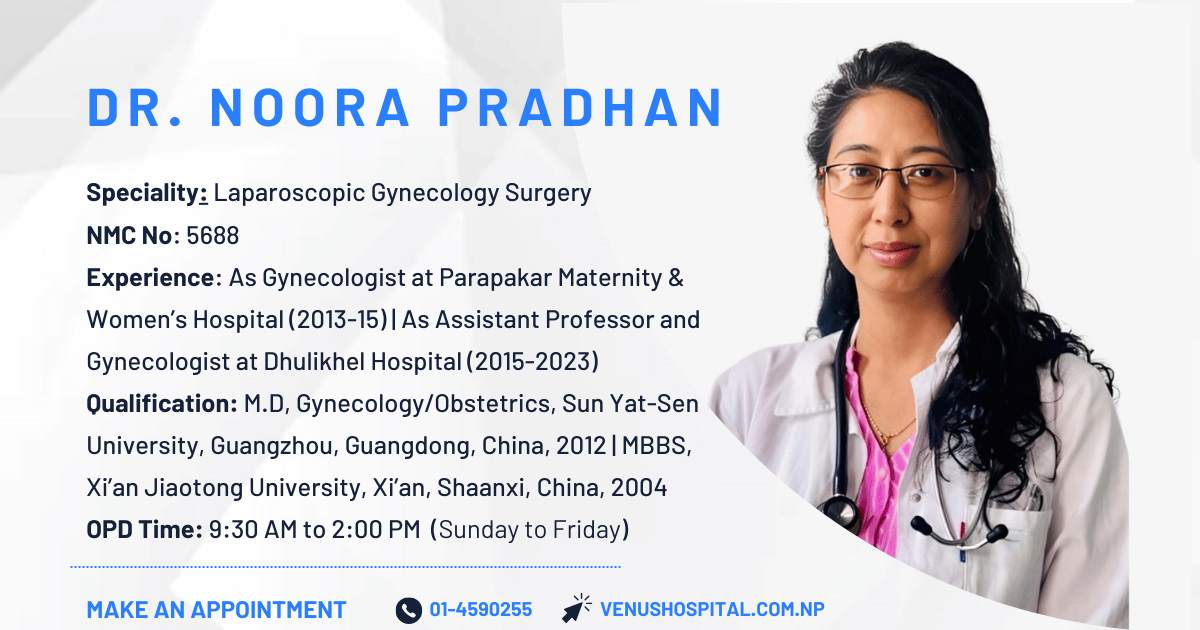
Dr. Noora Pradhan is an expert gynecologist at Venus Hospital. She obtained her MBBS degree from Xi’an Jiaotong University in China, finishing in 2004. She additionally completed her MD in Gynecology and Obstetrics at Sun Yat-Sen University in Guangzhou in 2012. Dr Pradhan is skilled in minimally invasive gynecological procedures as has years of experience alongside an international education background.
She previously served as a gynecologist at Paropakar Maternity and Women’s Hospital from 2013 to 2015. Additionally, she worked at Dhulikhel Hospital as a gynecologist and assistant professor from 2015 to 2023. She is acknowledged for her surgical skills and compassionate approach to patient care.

Dr. Anuapama Suwal is an IVF expert working at Venus Hospital. She received her MBBS degree in 2005. She also earned an MD in Obstetrics and Gynecology in 2011 from Dhulikhel, Kathmandu University. To enhance her skills in IVF, gynecologic laparoscopy, and hysteroscopy, she pursued additional fellowship training. With a decade of experience, she has established a solid reputation and consistently helps couples in fulfilling their parenting desire. Dr. Suwal is a trusted doctor registered in the Nepal Medical Council, possessing the NMC number 6102. She is employed at Venus Hospital and addresses various gynecological problems using minimally invasive methods. Her continued commitment and focus on a patient-care approach made her one of the best IVF experts in Nepal.
Although neurosurgery is a well-known medical term, it is not associated with a specific form of surgery. Rather, it is an umbrella term used to represent a wide range of surgeries related to the brain, spine, and nervous system. There are many types of surgeries within this umbrella term. Some of these types of neurosurgeries include general neurosurgery, neurosurgical oncology, paediatric neurosurgery, neurosurgical spine surgery, and functional neurosurgery.
In this blog, we discussed five of the common types of neurosurgeries and procedures. We hope you found this helpful. If you seek further insights into health, do check out some of our other blogs. And, if you want the best neurosurgery in Nepal, look no further than Venus Hospital, the best hospital in Nepal.
Neurosurgery is a form of surgery that focuses on fixing problems associated with the brain, spinal cord, and nervous system throughout the body.
The common types of neurosurgeries include general neurosurgery, neurosurgical oncology, paediatric neurosurgery, neurosurgical spine surgery, and functional neurosurgery.
General neurosurgery consists of surgical procedures aimed at various conditions that affect the brain, spinal cord, and peripheral nerves, including brain surgery, spinal surgery, peripheral nerve surgery, functional neurosurgery, paediatric neurosurgery, neuro-oncology, and neurovascular surgery.
Neurosurgical oncology is a specialised field within neurosurgery focusing on the diagnosis and treatment of tumours and cancers affecting the central nervous system.
Paediatric neurosurgery covers a wide range of disorders, including congenital anomalies, brain and spinal cord tumours, trauma and injury, epilepsy, paediatric spinal disorders, neuroendoscopy, craniofacial surgery, and foetal surgery.
Neurosurgical spine surgery, also known as spinal neurosurgery, is a specialised field of neurosurgery that focuses on the diagnosis, treatment, and management of disorders affecting the spine, spinal cord, and associated nerves.
Functional neurosurgery, also known as stereotactic and functional neurosurgery, is a subspecialty of neurosurgery that focuses on the surgical treatment of neurological disorders affecting brain function, movement, and behaviour.
Functional neurosurgery covers movement disorders, epilepsy surgery, pain management, psychiatric disorders, spasticity and movement disorders, neuromodulation, radiosurgery, and neurosurgical procedures for brain mapping and localisation.